-Rajesh K. Jha
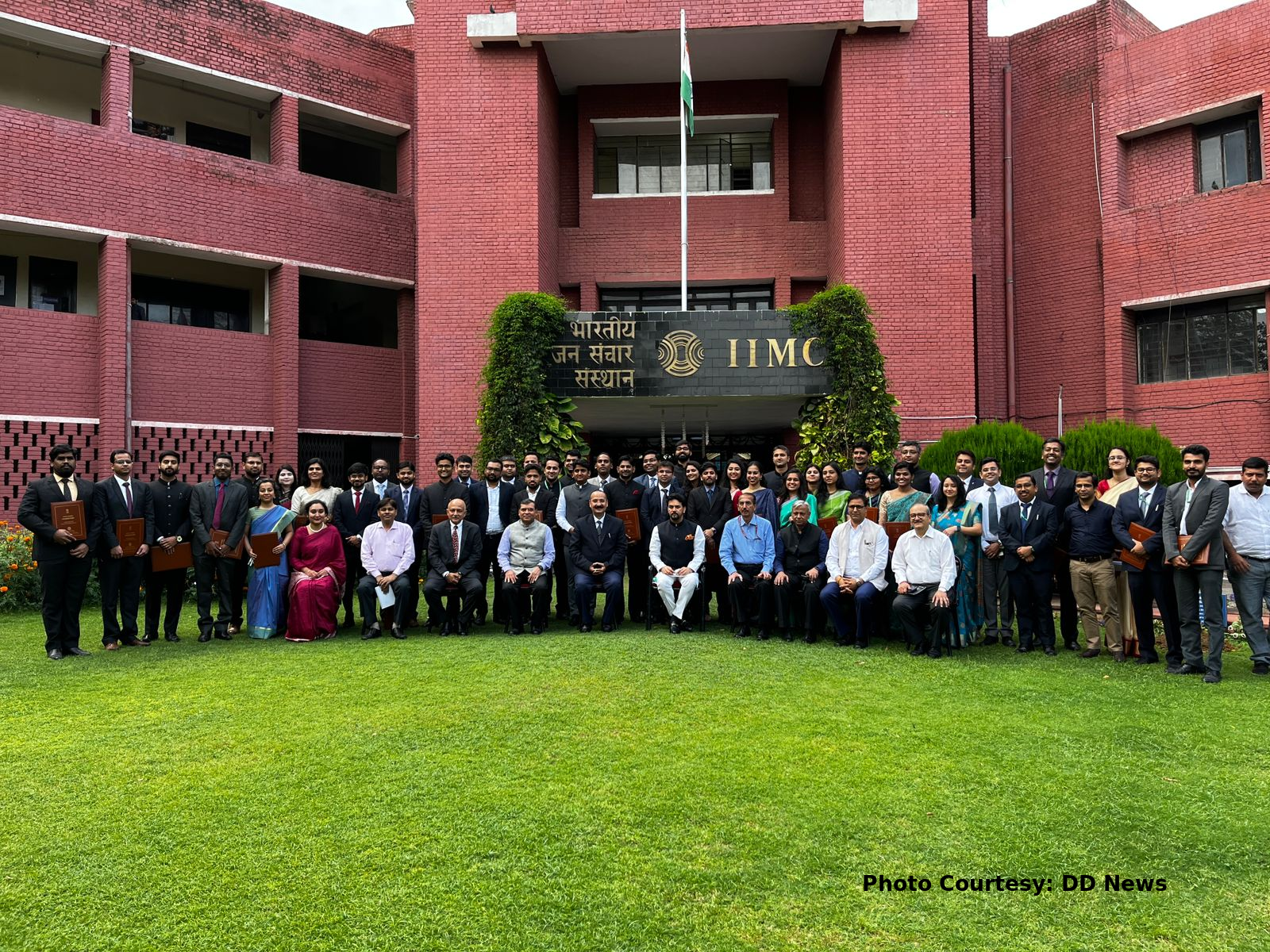
There is a raging debate in the internal communication WhatsApp group of the Indian Information Service officers…sorry Indian Information Service (Group A), Direct recruit officers. How dare some of the people not recruited through the Civil Services Examination (CSE) write ‘IIS’ on their visiting cards or introduce themselves as IIS officer? This kind of discussion flares in the group on regular intervals. The common topic being whether IIS officers are ‘managers’ or they are supposed to do the regular work of the department where they are posted. Should IIS be part of the CSE or be delinked from it? The discussion brings forth the deep anxiety and dilemma of some of the brightest minds selected for the IIS-Gr.A though the haloed civil services examination.
Having spent more than quarter of a century as part of the IIS, I thought it important to elaborate upon my understanding of this service as it exists today and to explore the sources of our dilemma and anxiety. I don’t claim any special validity for my views as they are purely my personal reflections based on my experience in the service and the general outlook towards work and the worldview that I hold. They should be seen, understood and evaluated in this light alone.
There is no denying the fact that most of us spend our careers in the IIS in a ‘Trishanku’ like situation. We enter the service, often with quite high ranks, hoping to be the part of civil services (which technically we are) in terms of power and authority, recognition and acceptance among our peers from other branches of civil services. Soon we discover that the service lacks all those things which we associate with the tag of ‘civil servants’. Of course, there is no dearth of meaningful and fulfilling work out there but that is not what an entrant to the civil services is looking for. Here you have the opportunity to excel in YOUR work but have nothing to give to others in tangible terms. You can make a well rounded News bulletin, bring out a well produced journal with high quality write ups, put up an excellent exhibition with your team and so on. But alas, you have no power or authority, in the sense it is commonly understood in the context of the civil services. The anxiety that starts at the earlier stage lasts a long time, unless you start enjoying your work and don’t hanker for power and authority.
I completely disagree with the view that it is better, more valuable and important to be a manager than a worker which is captured in the Desi phrase of मजदूर या ठेकेदार? Why should it be less fulfilling, less valuable to do a well rounded news item or press release or book production or conducting a press conference than being a manager of a team of 10-20 persons doing these things for us? There is nothing inherently valuable in the role of a manager compared to that of a worker. The entire focus on being ‘officer’ often distorts not only our approach to work but also warps our relations with our coworkers, colleagues and people supposedly below in the hierarchy due to the accident of birth (as reflected in the year of selection for the civil services). I don’t mean to say that respect for your seniors or the chain of command in work is useless, but these should be taken for what they are- functional arrangements for smooth execution of work and nothing more. I sometimes wonder if we should explore the ways to inculcate ‘Worker Like Qualities’ in ourselves rather than being obsessed with ‘Officer Like Qualities’.
Closely linked to the above point is our relation to the IIS Group B officers who are promoted to become Group A officers after spending a substantial period in junior positions. It is a (sad) spectacle to see the passion with which IIS Gr. A officers oppose any equivalence drawn between the direct recruits and the promoted officers, even when they have been promoted to the same rank or above. Rather than presenting a combined front against the systemic issues that harm the career prospects of both, we derive a pleasure in setting up an imaginary enemy before us. Is it because we lack the courage and unity to fight the real underlying causes? I wonder why we consider Group B as threat to us. I don’t know of any Group B officer who has become the DG or Principal DG as yet. Even the number of Group B officers retiring as ADG is minuscule. And even if they did, I find nothing wrong in it. A Group B officer deserves promotion and career enhancement as much as a Gr A IIS officer does. In fact to deny or resent such opportunities to Group B officers reflects poorly on us, almost an expression of our frustration with our job and career.
Another frequent point of discussion among IIS officers is the issue of their designation. Surely, there were anomalies in nomenclature and these have been standardized in line with what other wings of civil services have. But the infatuation with designation is futile and ridiculous. Let me take an example. What could be less glamorous than being called a ‘Collector’? But imagine the ring of authority it carries. It is not the nomenclature but the content of work that invests the post with a halo, an aura. The IIS has to find content for the work, as it progresses up in the hierarchy. Unfortunately, we continue to do almost the same work throughout our careers. There is hardly any substantial difference between our work when we start our careers and 25 years thereafter. Except perhaps for the top position in the media wings, others down the hierarchy continue to do the same things throughout their career. There is hardly any delegation of power from top to down, so much so that even a Casual Leave application goes to the top boss in most of the organisations for approval. Forget about financial delegation etc for those below the top in the hierarchy. People posted in the regions do enjoy some degree of delegated power but that is because they are heading those units in the region. If the seniors of the service occupying top positions don’t think of empowering their junior colleagues and bestow authority and dignity upon them, the scenario will hardly improve.
That brings me to the final point of this write up. Should IIS be part of the civil services? I feel it should not. It is known that our contribution in the policy making is minimal. We remain posted in our respective media units running the daily affairs of the organisation routinely and doing the fire fighting when the crisis erupts. The job profile of the IIS officers remains predominantly like a professional, an expert in the media, sometimes doing the management work at the functional level alone. The ethos of IIS is drastically different from other wings of the civil services. It is much closer to a professional, creative area of work than administrative and bureaucratic one.
It is a fact that those who write civil services examination come with a certain expectation about the jobs they will be doing in their careers which will bestow upon them power, authority, privileges and acceptance among their peer group. All of these are absent, largely, for a person coming to the IIS. I would call IIS a ‘meta-civil service’ (don’t like to use the ‘Pseudo Civil Service for its negative connotation) because by conferring a formal designation and position, it allows its entrants to move into deputations and other areas of administrative work which are much closer to the typical work associated with the civil services. It is sad to see some of the most promising and brilliant minds suffering the anxiety and dilemma caused by the stark difference between the expectation with which they enter the prestigious Group A Civil Service and the reality of a very different kind of work they have to do. The future generation needs to be spared this situation.
I understand my contrarian views on the IIS may give the impression that I regret being in the service. On the contrary, I feel a sense of pride and happiness being part of the service. It has given me a great opportunity to work in a meaningful and satisfying way and pursue my own, even though limited, creative urges. It is such an immense pleasure to see my friends from the IIS showing their brilliance in their creative pursuits. I wonder if there is any other service where, proportionately speaking, so many of them have written valuable books or contributed in creative pursuits. Many of the bright, young officers who took a chance and left the IIS midway are doing exceptional work in their chosen fields. The overall atmosphere of the IIS is non-hierarchical and friendly unlike most of the other branches of the civil services which are quite often suffocating.
This is the service which can give you a sense of fulfillment and happiness if you value creativity over the desire to wield authority, if you take pride in working over managing, if you value friendship over hierarchy.
So, reboot and enjoy.
***
 Hyphen
Leave a comment